
Africa · Egypt · Destination guide
Luxor
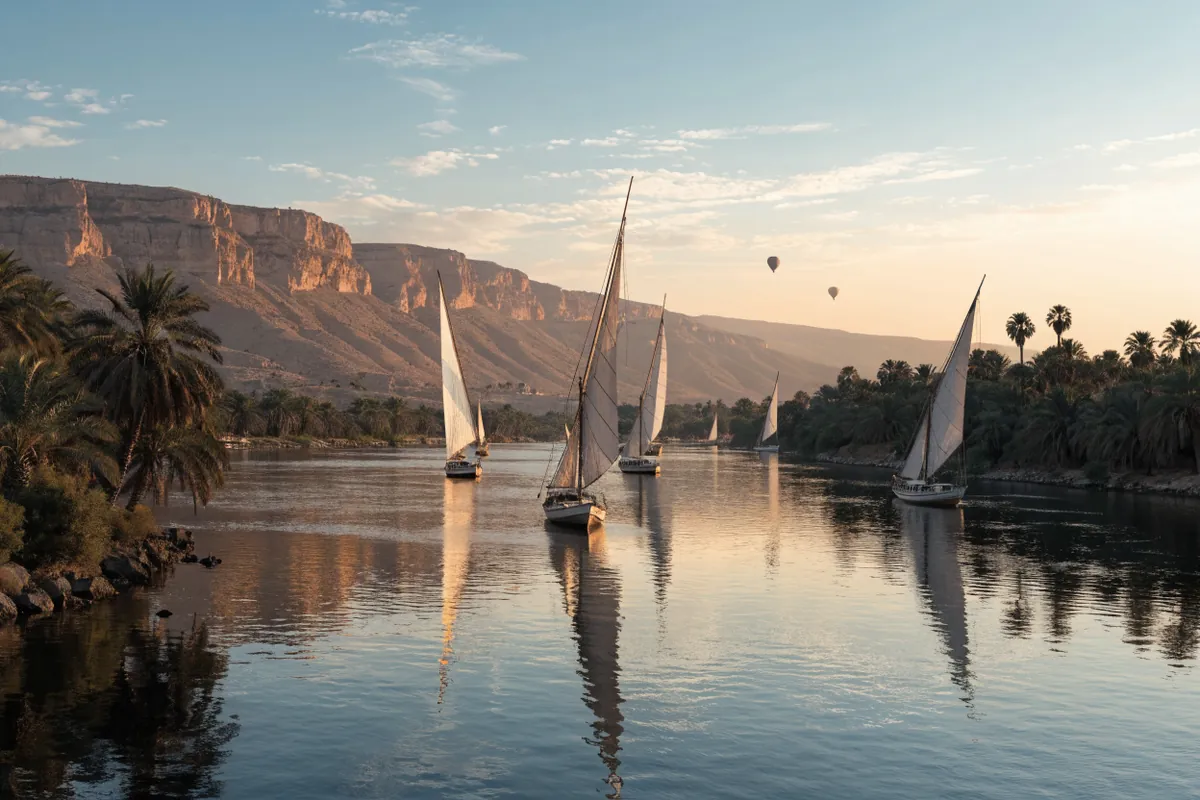
Luxor’s temples and tombs deserve more than a hurried stop. Organise the days around the two banks of the Nile, then choose the sites that best match your interest in ancient Egypt.
- Temples
- Royal tombs
- Nile scenery
Your starting point
Separate the East Bank and West Bank days
Consider three nights for an arrival day and two focused sightseeing days. Give the East Bank temples their own time, then choose a manageable West Bank route. The royal tombs lie underground in a dry desert valley and the West Bank sites are spread out, so that is usually the more demanding day for heat, stairs and walking; if anyone in the group finds this hard, we plan fewer tombs and one temple there. [3] If you are arriving or leaving on a Nile cruise, we compare its included visits with your interests before adding nights, so no excursion is repeated.
Suggested lengths are starting points for a conversation. Your final route depends on your dates, interests and availability.
East Bank: Karnak and Luxor Temple
Luxor’s official visitor guide places Karnak and Luxor Temple on the East Bank. Treat them as two substantial visits, with a break between them if that suits your pace. Your guide can build the explanation around your interests rather than rushing through the entire site list. [1]
West Bank: choose the tombs deliberately
Hatshepsut or Medinet Habu: follow your curiosity
The West Bank includes Hatshepsut’s temple at Deir el-Bahari and the temple complex at Medinet Habu. Compare them with your other plans before adding both. Leaving time to look closely at one site may be more rewarding than arriving at a second when the group is tired. [2]
When to go
Put comfort into the daily sequence
Egypt’s official tourism guidance describes warm winter conditions in Luxor and peak summer months in June–August. For the outdoor sites, we plan early starts, shade and breaks with your guide. Keep the hottest part of a demanding day lighter instead of treating every available hour as sightseeing time. [4]
Getting around
Your hotel’s bank affects the day
We note whether your accommodation is on the East or West Bank and how each visit crosses the river, with the full pickup and return arranged. For cruise guests, we confirm embarkation, disembarkation and the visits included on those days. [1]
Follow your curiosity
More places to consider
If Luxor caught your eye, follow the scenery, experiences or places that interest you.
- In the same country
Giza Pyramids
Give the pyramids their own archaeological visit, with the route chosen around walking comfort.
Explore the guide ↗ - In the same country
Cairo
Connect museums and historic quarters with a separately planned archaeological visit at Giza.
Explore the guide ↗ - Culture & city days
Petra
Explore rock-cut heritage on a walking route chosen around the site and your group’s comfort.
Explore the guide ↗
Like the look of more than one? Tell us, and we’ll plan the travel days between them for you.
Explore more in Africa →Make it yours
Your trip. Your kind of days.
Tell us if Luxor is a hotel stay or part of a cruise, which periods of Egyptian history interest you and how you feel about early starts.
A little clarity before you go
Questions before you plan
Does a Nile cruise replace a Luxor stay?
It depends on the cruise schedule and the time it allows at the sites you care about. We compare the included visits with you; extra nights suit a slower pace or additional interests, but are not always needed.
Can we visit every tomb in the Valley of the Kings?
We plan around the tombs open and the admissions available for your dates, and tell you which ones your visit covers and how much walking and stair use is involved. A selective route is often easier to enjoy than pursuing a total count. [3]
Need help with the arrangements? Explore our travel services, or compare more destinations in Africa.
Official planning sources · checked 16 October 2026
- Experience Egypt: Luxor and its two banks
- Experience Egypt: West Bank sites
- Egypt Ministry of Tourism and Antiquities: Valley of the Kings
- Experience Egypt: visitor questions and seasons
Route lengths and pacing are our planning suggestions, and the official sources give destination background. We confirm opening arrangements and transport for your travel dates, and go through entry requirements with you, as we plan your trip.