
Asia · Destination guide
Japan
Start with the contrast between Tokyo’s neighbourhoods and Kyoto’s temple gardens, then decide how much time to give Osaka. Japan rewards a route with room for small discoveries as well as the places you have come to see.
- Culture
- City life
- Food
Your starting point
Tokyo and Kansai, at a comfortable pace
For a first visit, consider 8–10 nights split between Tokyo and Kyoto or Osaka. With only five nights, our suggestion is to choose one region and explore it properly. This leaves more time for neighbourhood walks and fewer days spent checking out, moving luggage and finding the next hotel.
Suggested lengths are starting points for a conversation. Your final route depends on your dates, interests and availability.
Tokyo: build days around neighbourhoods
Pair nearby interests rather than crossing the city repeatedly: Asakusa for a temple visit, or Shibuya and Shinjuku for contemporary city life. Pick one main area each day and leave a meal or an afternoon unplanned. [1]
Kyoto: leave room between landmarks
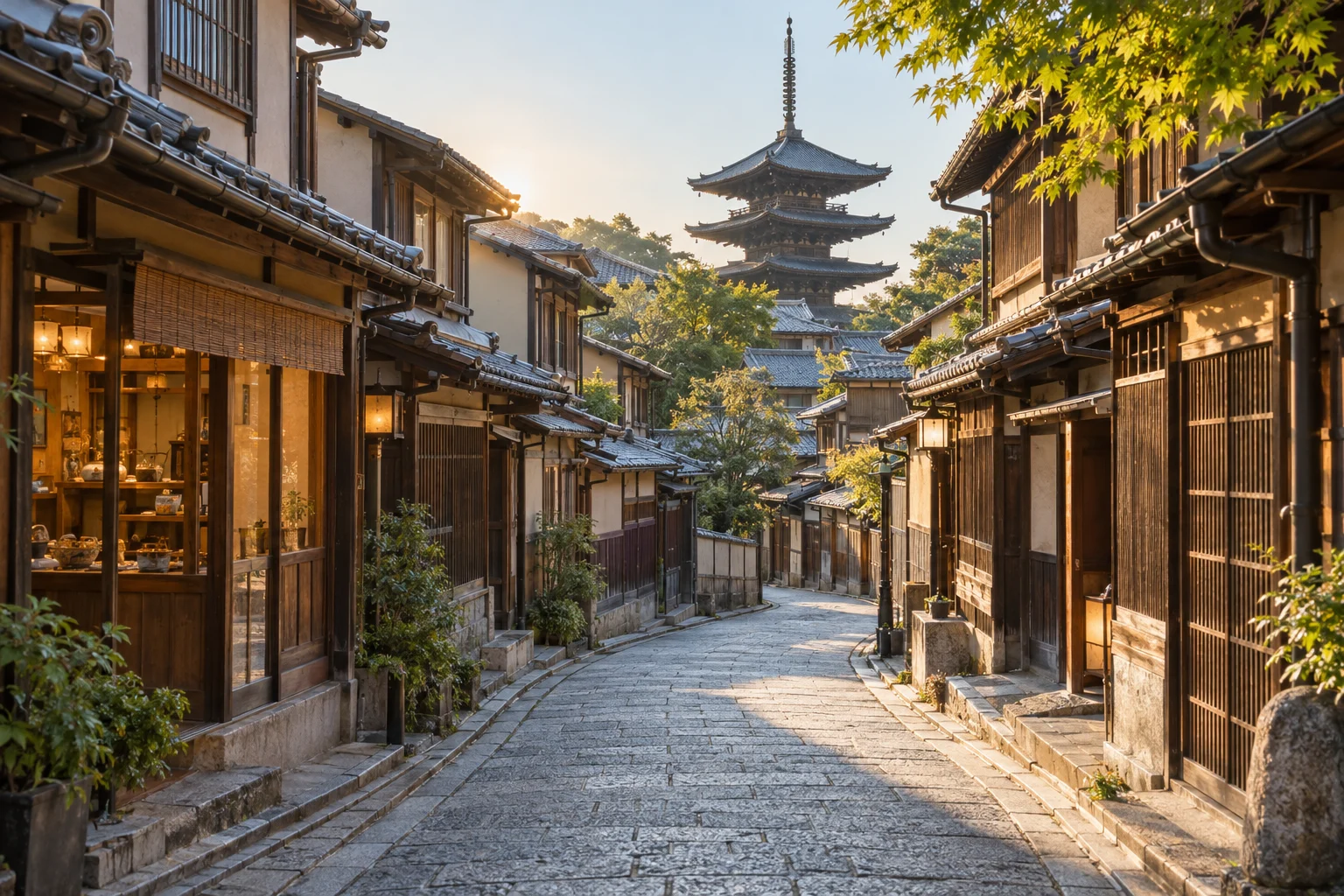
Temple gardens and traditional streets work well as a slower part of the journey. Choose a few places you care about, then build time around them. Kyoto Station is a useful transport base, especially if you plan onward rail travel. [2]
Osaka or Nara: add a different day
Osaka brings shopping and food districts; Nara offers parkland and temple heritage. Both can be explored from Kyoto. Decide whether another hotel move adds enough value, or whether a day out would suit your group better. [3]
When to go
Choose the season before chasing a photograph
Japan has four distinct seasons, with major differences between northern regions and southern islands. Spring blossom and autumn colour are reasons to travel in themselves, and their timing shifts from year to year, so we build the route around places and experiences, with seasonal scenery as a bonus. [4]
Getting around
Plan the rail route before choosing a pass
Tokyo and Kyoto are connected by the Tokaido Shinkansen. We map your actual intercity journeys before choosing tickets or a rail pass, and for each hotel we look at the station exit, walking distance and luggage arrangements, not just the name of the nearest station. We keep the arrival day light after the international flight. [2]
Follow your curiosity
More places to consider
If Japan caught your eye, follow the scenery, experiences or places that interest you.
- Culture & city days
South Korea
Explore city neighbourhoods, food and cultural visits, with Seoul and Busan as different starting points.
Explore the guide ↗ - Culture & city days
China
Compare city heritage and major cultural sites, with a route that gives each base enough time.
Explore the guide ↗ - Similar scenery
Switzerland
If the train journey is part of the holiday, compare Swiss scenic rail with Japan’s city-to-city routes.
Explore the guide ↗
Like the look of more than one? Tell us, and we’ll plan the travel days between them for you.
Explore more in Asia →Make it yours
Your trip. Your kind of days.
Tell us your travel month, whether Tokyo or Kyoto matters most, and any theme-park or slower-walking days you want included.
A little clarity before you go
Questions before you plan
Do we need to stay in both Kyoto and Osaka?
Not necessarily. For a shorter visit, choose the base that best fits your evenings and use day trips for the other city. Two bases can make sense if you have specific early starts or want several nights in each place.
Can a theme-park day fit into this route?
Yes. We give it a dedicated day rather than adding it after a long transfer. Tell us which park matters to your group and we’ll settle the hotels and the order of cities around it.
Need help with the arrangements? Explore our travel services, or compare more destinations in Asia.
Official planning sources · checked 16 October 2026
- JNTO: cultural route and Tokyo neighbourhoods
- JNTO: Kyoto Station and rail connections
- JNTO: Kyoto, Nara and Osaka
- JNTO: planning and seasonal questions
Route lengths and pacing are our planning suggestions. Official sources provide destination background, and we confirm opening arrangements, transport and entry requirements for your travel dates as we plan your trip.